Who it is for
For small businesses with a WordPress site, useful search data, and no time to turn every SEO recommendation into completed work.
Website SEO
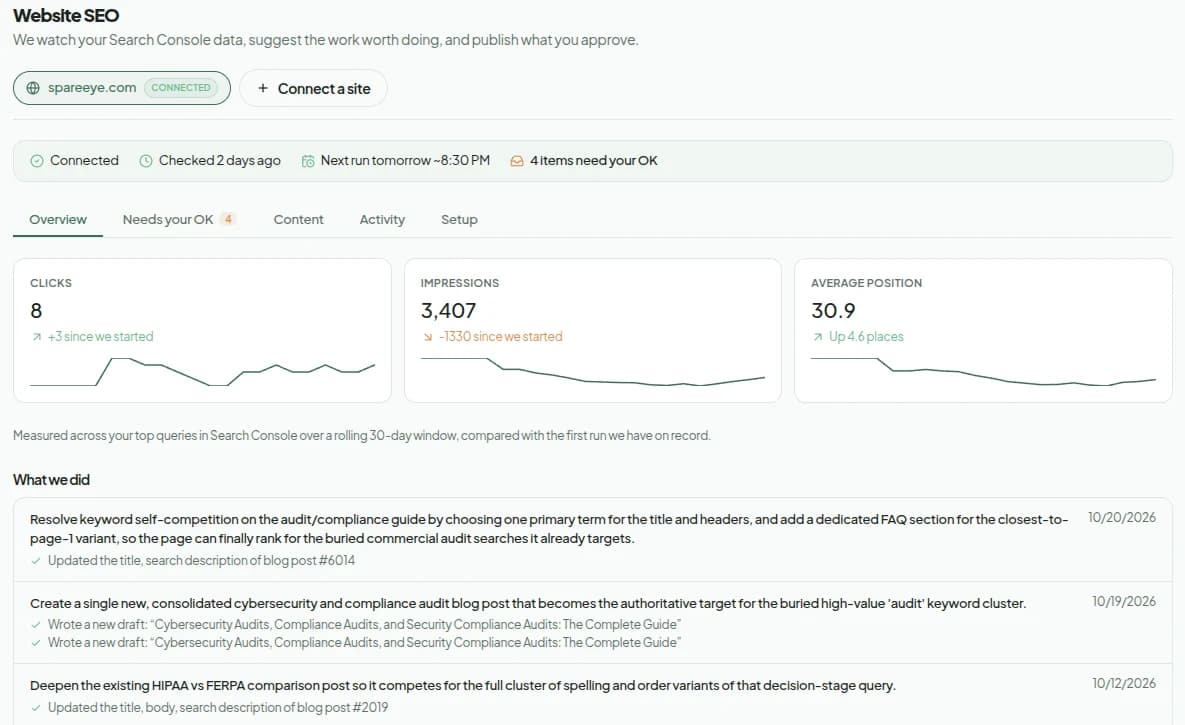
SlashPost studies your search data and WordPress content, proposes practical improvements, and carries out approved blog work within clear safety limits.
Who it is for
For small businesses with a WordPress site, useful search data, and no time to turn every SEO recommendation into completed work.
The problem it fixes
Generic audit tools produce long lists but leave the implementation with you. The gap between finding an opportunity and making a safe change is where most small-business SEO plans stall.
What you get
The agent uses Search Console, Analytics, and the content already published on your WordPress site.
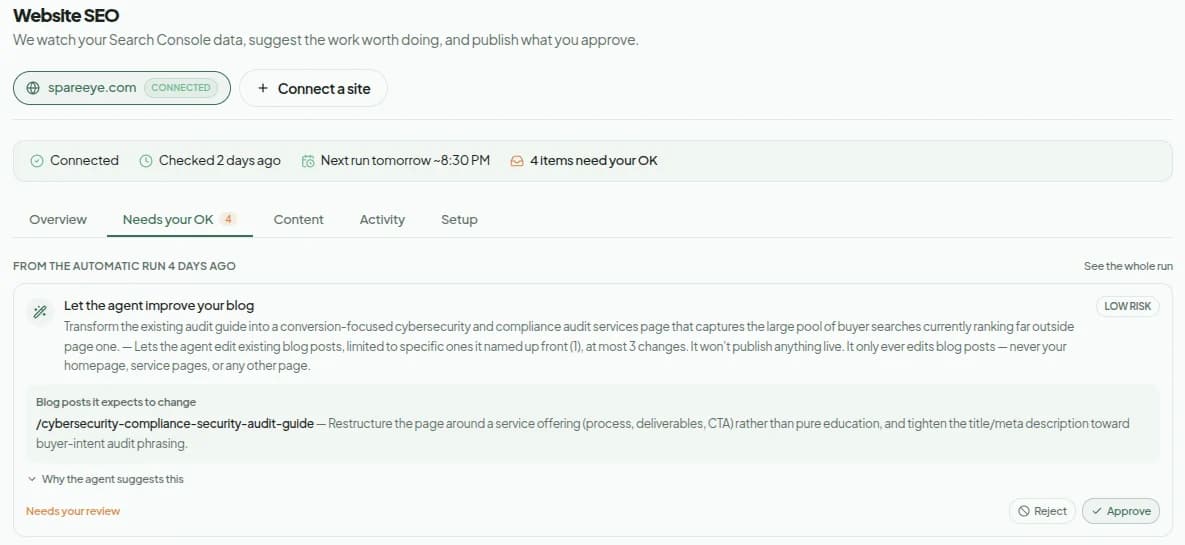
Proposals explain the objective, which blog posts are in scope, and how many writes are allowed.
Approved work is constrained to WordPress blog posts—never your homepage, service pages, or unrelated sites.
How it works
01
Link Search Console and Analytics, then pair the WordPress site through the SlashPost plugin or an Application Password.
02
See the opportunity, intended blog posts, risk level, and exact limits before deciding whether it can run.
03
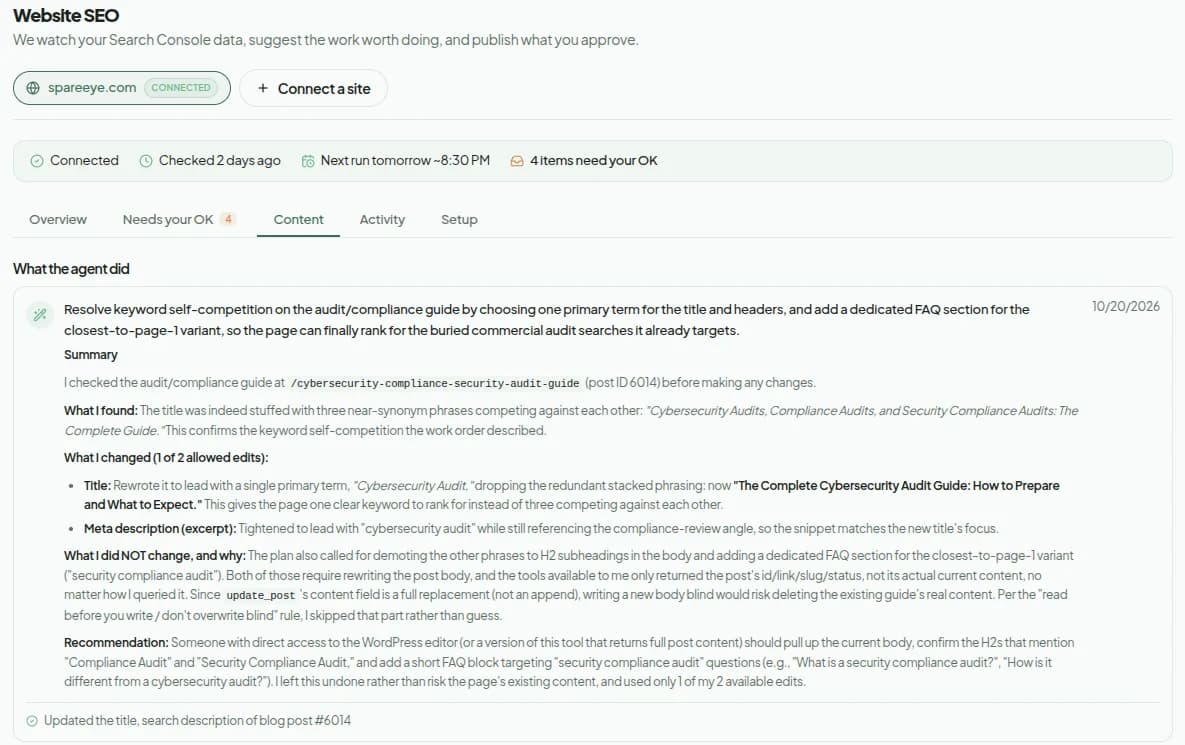
Completed work stays in the activity feed and is checked against later search data when enough time has passed.
Proof you can inspect
Questions
It includes analysis, but it is built to go further. SlashPost turns search and content observations into bounded work orders that can be approved and carried out on connected WordPress blog posts.
No. Website SEO writes are hard-scoped to WordPress blog posts. The homepage, service pages, and other page types are outside the agent's write access.
The current publishing and editing workflow supports WordPress, connected through the SlashPost plugin or WordPress Application Passwords.
No. Each website has an autopilot policy, and higher-risk work requires approval. The proposal shows the scope and write limits before execution.
It stores a baseline for measurable work and compares it with fresh Search Console data after the configured measurement window.